| Home | Back | |||||||||||||||||||||||||||||||||||||||||||||||||||||||||||||||||||||||||||||||||||||||||||||||||||||||||||||||||||||||||||||||||||||||||||||||||||||||||||||||||||||||||||||||||||||||||||||||||||||||||||||||
Blato ; Priscapac, 25.05. – 02.06. 2001
Eotvos Joseph Gymnasium – Budapest, HungaryGymnasium
– Blato, Croatia
Learning about renewable energy Can you imagine life without television, cars or computers? What if you had
to cook your dinner over a fire or fetch water from the river? It might
be fun for a camping trip, but you probably would not to do it every
day. But, that`s how life was before scientists and inventors discovered
ways to use energy to make our lives easier. Today, most of the energy we use comes from fossil fuels. While fossil fuels
are still being created today by underground heat and pressure, they are
being consumed more rapidly than they are created. For that reason,
fossil fuels are considered nonrenewable;
that is, they are not replaced as soon as we use them. Because our world depends so much on energy, we need to find sources of
energy that will last a long time. What if there was a type of energy
that never ran out? It is called renewable
energy. In addition, because there are so many people on Earth using fossil fuels,
we create a lot of pollution. So, we should also use energy sources that
produce as little pollution as possible. Generally, renewable energy
systems are less polluting than fossil fuel systems. Renewable energy systems use resources that are constantly replaced.
Examples of renewable energy systems include solar, wind and geothermal
energy. We also get renewable energy from trees, plants, rivers and even
garbage. Solar energyWe can use the energy in sunshine to warm and light our homes (solar
heating), heat our water(solar
water heating), and provide electricity to power our lights, stoves,
refrigerators...(photovoltaic energy). Solar water heatingSun can heat water for bathing and laundry. Most solar water heating systems
have two main parts: the solar collector and the storage tank. A common
collector is called a flat-plate collector, and is usually mounted on
the roof.Thic collector is a box with a transparent cover that faces the
sun. Small tubes run trough the box, carrying the water. The tubes are
mounted on a metal apsorber plate, which is painted black to absorb the
sun`s heat. The storage tank can be just a mdified water heater, but
ideally it should be larger, well-insulated tank. Wind powerOne of the alternative for solar energy is using wind power. Did you know
that wind is considered an indirect form of solar energy? This is
because wind is driven mainly by temperature differences on the surface
of the earth that are caused by sunshine. For centuries, the wind has been used to sail ships, grind grain and pump
water. Now, people use wind to generate electricity. The windmills built
long ago had many blades, but today`s wind turbines usually have just
two or three blades, but they are much longer. The blades run a
generator that produce electricity. The longer blades andthe faster the
wind speed, the more electricity the turbine generates. Wind turbines
are placed on towers because the wind blows harder and more steadily
above the ground.
Monitoring the Sun`s radiation The Sun`s energy that is available for collection depends on the intensity
of the light, and on how long the Sun shines. To be able to compare the
Sun`s energy in different parts of the world, the scientists measured
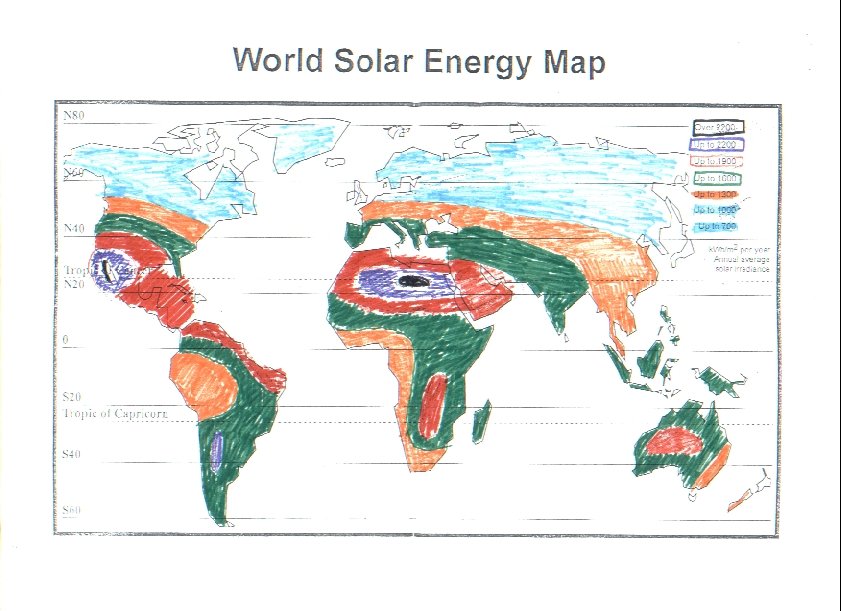
how much energy falls on each square meter of land (kWh/m2). Interpreting a map: Q: Look at the map on the privious page and compare different parts of the
world based on data shown on this map. What can you say about Adriatic
Sea area? A: We can see that the quantity of Sun`s energy is biggest around Equator
and it`s getting lower as we go to the poles. Adriatic area, especially
it`s southern parts, where Priscapac is settled, gets about 1600 kWh/m2.
But, as we are interested in summer time,when the are tourists in
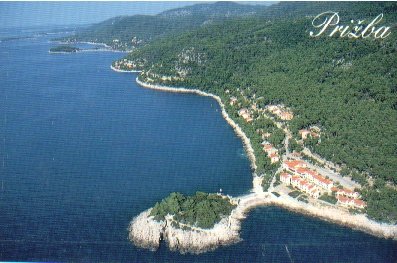
tourist village, that number is even bigger. Our job was to made a plan about using solar energy for water heating in
Priscapac, the tourist village where we were staying during this
Eurocamp. We took some prospects about Solar water haeting systems from
local suppliers. and we choose one of them for our project. It has solar
panels and tanks that have to be mounted on the roof
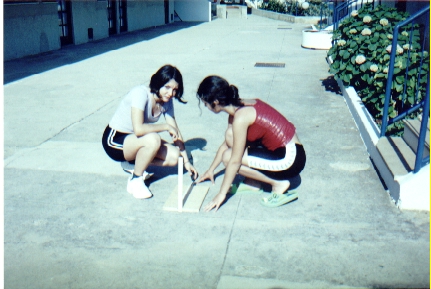
A solar log sheet: The amount of sunlight arriving varies during the day, and it varies from day to day. For monitoring the Sun`s radiation we made a simple sundial and record the position of the end of the shadow several times during the day. From the length of the shadow and length of the stick we can estimate the angle of the Sun. We need this so we can calculate the angle of the solar panels. The panels must be vertical to the Sun at highest point (at 12:00) We also measured the air temperature, so we can see how temperature variing
during the day, and how it depends on weather.
date:
26.05.2001.
table: A solar log sheet notes: 1.
weather: cloudy, half – cloudy, sunny, 2.
length of the stick = 36 cm 3.
estimate the angle of the Sun (α):
tg α = (length of the stick) / (length of the shadow) This is the scheme of the tourist village.
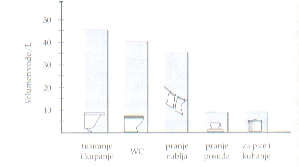
- A bungalows have 12 apartments, each of them is for 5 persons - B bungalows have 16 apartments, eight for 5 persons, and eight for 2 persons - C bungalows have 21 apartments, 16 for 5 persons, and 5 for 2 persons So, when all capacities are full, there are about two hundred people living there. The diagram below shows average daily water quantity per person. We can see that the man spends daily about 140 l of water, of which 90 l of warm water. If we divide this spending over bungalows, needed quantity of water is:
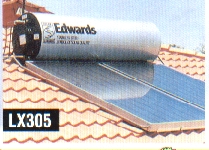
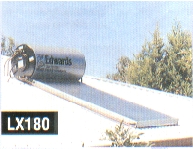
Our system will consists of two solar water-heating models: First one (LX 110) has 180 l tank, and panel area of 2m2, and the second one (LX 305) has bigger, 300 l, tank with the panel area of 4m2.
table: Distribution of solar water heating
models over bungalows
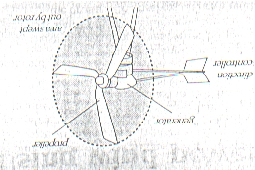
On the roof of building where the restaurant is, there are a lot of chimneys and ventilation holes so it is impossible to put solar panels on it. Because of that, we suggest putting a roof construction above the parking place, and put solar panels, that will heat water for restaurant and market needs, on it. In this way, parking place will be in the shadow and it would get sufficient area for solar panels. Using wind power Wind is another source of renewable energy. A wind turbine collects energy from moving air. The wind spins the rotor blades round, and this turns the generator.
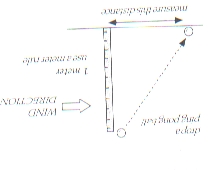
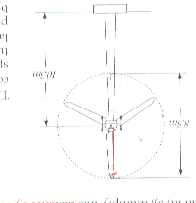
Because the wind speed isn’t so big here on Prišćapac, we can use wind only as an alternative source of energy, maybe for public light or something like that. At first, we have to measure wind speed. For that purpose we use a simple method shown on diagram below.
We measured the distance from the foot of the rule to the point where the ball lands. To calculate the wind speed, we have to multiply this distance by 9.
average wind speed: v= 5.1 m/s This is an image of one wind turbine.
The amount of energy, which a turbine can collect from the wind, depends on the wind speed and on the length of the turbine blades. Available power: P=
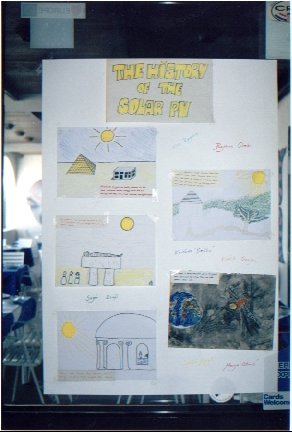
A×d×v3 (A-area swept out by blades, d-density of air, v-wind speed) We will adjust the dužinu of the blades to our needs. For example, if the blades are 8.5 m long, the turbine can provide 36 kW of power when the wind speed is 5.1 m/s. Making a poster: Solar power historyWe found some notes about this issue on Internet. This is summary of one of them: Ø Ancient Egyptians built places to live that allowed stored energy from the sun during the day, and heat release during the night. Ø Egyptians also used sun as a part of their mummification process. Ø Greek soldiers, with help of Archimedes, focused light on a Roman fleet by using mirrors. The mirrors were used to concentrate the energy of the sun, and cause the fleet’s sails to burn. Ø Roman bathhouses had famous south facing windows that heated the rooms. Ø 1767. the world’s first solar collector was built by Swiss scientist Horace the Saussare Ø In 1891. the first commercial solar water heater was patented by Clarence Kemp. Ø In 1958. a small satellite of US Vanguard was powered by a less than one watt power solar cell
This is the poster we made.
But, renewable energy is still a future for lots of people, including us. It’s still too expensive and many of us can’t afford it. So we have to be satisfied with this one – nonrenewable. It is much cheaper, but makes a lot of pollution. And, since it’s nonrenewable, we have to save it. This is our suggestion how to do that.
Conclusion
Trough this program we made on Eurocamp Priscapac we discussed about advantages and disadvantages of using solar energy, and we came to conclusion that although solar power is not used by many people, because it is expensive, it is the most accessible source of energy. Beside that, it’s ecologically acceptable because it doesn’t pollute the environment. This was made by: 1. Kristina Baltić 2. Marija Cetinić 3. Regina Kiss 4. Orsolya Králik 5. Bojana Oreb 6. Zsófi Sugár 7. Margit Szellő 8. Juli Váli With help of prof. Ivana Biško Thank you! |
||||||||||||||||||||||||||||||||||||||||||||||||||||||||||||||||||||||||||||||||||||||||||||||||||||||||||||||||||||||||||||||||||||||||||||||||||||||||||||||||||||||||||||||||||||||||||||||||||||||||||||||||
| Home | ||||||||||||||||||||||||||||||||||||||||||||||||||||||||||||||||||||||||||||||||||||||||||||||||||||||||||||||||||||||||||||||||||||||||||||||||||||||||||||||||||||||||||||||||||||||||||||||||||||||||||||||||