Home      Back

MEDITERANEAN    FLORA


PRIŠĆAPAC, 25th of May - 1st of June 2001.


Saturday26th of May

Visiting Morkan the hill behind Prišćapac.

Getting knowledge about plants their names and terminating which family they belong to. Characteristics of ferns and two kinds of spermatophyte.

1.      Those that have seeds that can be seen (Gymnospermae)

2.      Those that have seeds that are hidden, the upper parts of the plant should be opened in order to see them. (Angiospermae)

·        picking up some ferns: Pteridium aquilinum or Polypodium australe

·        picking up Gymnospermae

Pinus halepensis – the most widely spread pine on the island (and if we find P. pinea or some other kind of pines Juniperus, Cupressus)

·        picking up Angiospermae:

Those woody and herbaceous ones

Making a distinction among the plants according to its blossom: Apiaceae, Asteraceae, Cichoriaceae, Lamiaceae, Malvaceae, Fabeceae, Rosaceae e.t.c...

·        characteristic medical herbs of this area:

Salvia officionalis

      Rosmarinus officinalis

      Thymus acicularis

      Malva paniflora

      Papaver

 The basic differences between dicotyledonous and Monocotyledonae, contrasting plant species: Monocotyledonae and Dicotyledonous plants.

·        picking up Monocotyledonae ( the greatest family of herbs – poaceae)

Tamus communis

Asparagus acutifolius

Allium

Muscari

Orchis – orchid

Similax aspera

Development of flora during the history of the island. The island Korčula was known as black – Korčula during the time of Greek and Roman domination on this territory. They gave that name to Korčula because of an oak tree that was widely spread there – holm oak (holly oak).

Quercus mex – picking up holm oaks and pine trees Pinus. People on this island have also been growing grapes (Vitis vinifera), olives (Olea europea), figs (Ficus carica), and carobs (ceratonia siliqua). These are characteristic plant species because of climate and soil of this area. The most widely spread is limestone, there is little soil, many stones, highlands, during the summer constant drought and high temperatures. Winters are mild concerning temperature with lots of rain.

Saturday the 26th of May

It was Saturday when we all got up and went to have breakfast. After breakfast we all got together in front of the hotel which we were staying at.

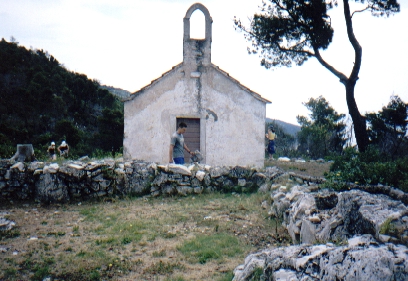
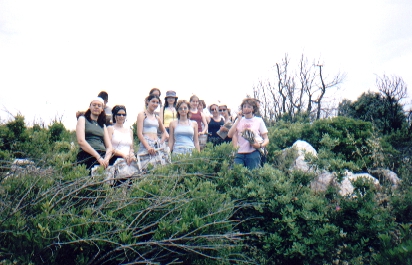
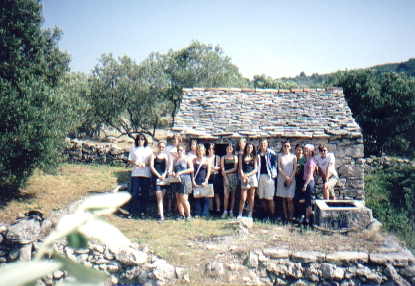
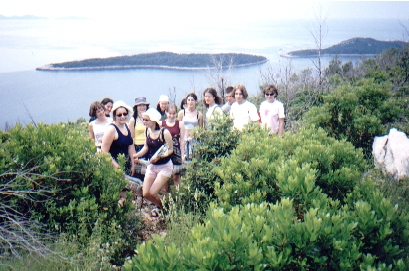
When we were ready we started climbing a little hill which was called “Morkan”. It was very sunny and boiling. When we got to the top of the hill we saw a little church called St. Mark.  

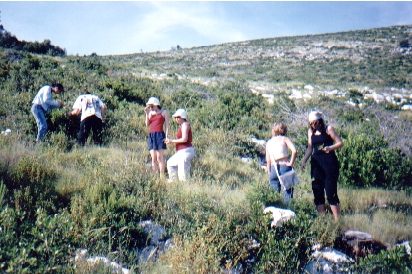
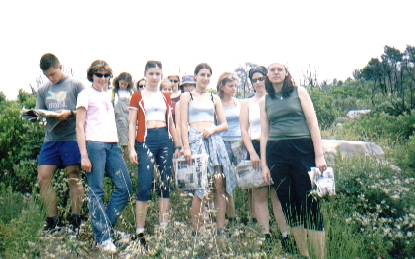
 The view that we could see from the hill was beautiful. After a little rest the teacher told us to collect different types of plants and lay them between two sheets of newspaper so they can dry easily. While we were picking very special plants our teachers were going around asking if we needed help and explained to us the characteristics of each plant. We also took some photos of the plants, the view, and some group photos were also taken.  

 We stayed on the top of the hill for about half an hour. While walking down the hill we picked plants which we didn’t find at the top.  

 In spite of the hot and sunny weather I think the Hungarian students really enjoyed it. The teachers were very happy too. After all who wouldn’t be happy when we can see how much nature beauties the places that we live in.

When we got back to the hotel we were exhausted so we all went for a swim to cool off.  


Monday the 28th of May

·        picking up the plants on the area near the level of high and low tide

·        exposure to the life conditions of such plants

Just a bit of soil – very shallow

A bit of water – because of lack of soil, water flows away very quickly (rain)

·        constant influence of salt that is being carried away by wind and waves

·        plant species on this area are adapted to these circumstances creating continuous survival:

a)      Adaptation of leaves that will either permanently of temporarily stop the extraction of water

b)      long root that ensures the necessary water

c)      little all year around green leaves are often leather like and very poor of sap, reducing their leaves

(Species like Laurus, Myrtus, Olea, Cupressaceae, and Ruscus)

The plants which are characteristic for dry areas are called Xerophytes. Most Xerophytes have not only limited extraction of water but they are making huge amounts of water during short rainy periods in the special tissues that become fat and pompous.

The typical examples are Cactuses – Cactoceae that have leaves reduced to thorns – Euphorbia species.

Some plants have developed special glands for reducing the amount of salt. The most widely spread plants that grow along the line of the sea are U.S. Crithmum maritimum, Cancelata, then pine Pinus halepesis; different kinds of herbs: Poaceae, Liliaceae (allium). Characteristic plant that grows in the sea is one type of Monocotyledononae – Posidonia oceanica. Very often in a bay the dry parts of Posidonia that have been ejected by the sea can be seen.

On the area of high and low tide we often find brown algae phaeophyceae (families Fucales, Cutleriales, Ectocarpales, Dictyotales). Chlorophyceale – green algae (Ulva lactuca – sea salad, Cladophora)

·        picking up some algae           

Monday 28th of May

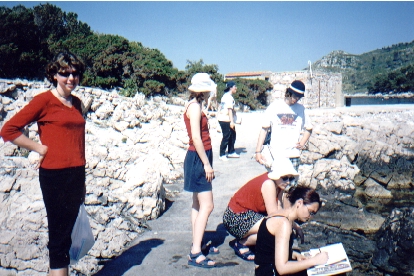
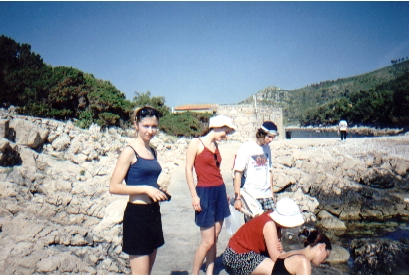
On Monday we all got together at 9 am and our teacher explained to us what we are going to do. She told us that we were going to pick algae, then she explained how we were going to pick them and put them on paper. She divided us into four groups. The leader of the group was from Croatia and the other members were from Hungary.

 We finished our work. Every group picked about 10 algae and then took them to our teacher. Afterwards she took us to the beach to show us some of the characteristic plants from the area. She explained to us the specific features of each plant. That afternoon we identified the algae by giving them their Latin names and arranging them by class (green algae or brown algae). Later we were free to go do what we wanted.

Tuesday the 29th of May

 Visiting Poljoprivreda Blato d. d. – the wine cellar. A wine expert will explain the wine production, different sorts of grapes and the sorts of wine that they have. The students will also be informed about different kinds of brandy and the way they are produced.

After visiting the wine cellar the students will also visit the olive oil refinery plant. They will be informed about the way of getting oil from olives, the kind of olives that are being processed, differences in quality and the sorts of olive oil. The olive oil refinery plant is situated on the field of Blato so after visiting it the students will have an opportunity to visit some of the cultivated wine yards. They will see some young plantations and some of the old ones.

Visiting the burnt area of Prižba.Fire raged two years ago. Thick pine forest and holm oak were devastated (Pinus and Quercus). The forest of the island of Korčula belongs to evergreen zone of the Mediterranean area. That is a narrow zone limited only close to the sea and it raises on the average to 300 – 400 m above sea level. It includes almost all our islands (showing a map “Biological geographic areas of Croatia”) as well as the island of Korčula. During the history forest areas were devastated without any plan. First of all they were cut down in order to get the agricultural area mostly vineyards and olive plantations.

By cutting down trees and by pasture from forest areas we get large areas of bush land (macchia). That is 1 – 2m high Underwood in which this vegetation prevails:

Arbutus unedo – strawberry tree

Ruscus

Phillirea media – holly

Erica – heather

Viburnum – wayfaring tree

Smilax

By its composition bush land consists of the same species as forest. The only difference is that it is lower and more impassable. If people continue with cutting down trees and pasture in bush land (further degradation), these stages will be developed: garigues, pastures and rocky grounds. Garigues are communities of low bush with plants rich in different perfume oils. These are low, thinned, heliophyt under trees.

Plant species that are present in garigue are:

Cistus – rock – rose (red and white)

Erica – heather

Rosmarinus  - rosemary

Calycotome

Paliurus – thorn bush

Genista – broom plant

Between the bushes there are different kinds of herbs. So, beside man’s influence there are also wind and animal effects. Man cuts down bushes, animals browse them and eat grass and the northern wind carries away the fragments of the ground. So, under the influence of animals, people and wind, the plants are being destroyed and we get dry rocky pastures. Water (rain) washes away almost all soil and the rocks spread all round.

On it some herbaceous one – year and several – year plants grow.

Phleum echinatum – timothy

Brachypodium – false bromegrass

Agrostis

Cymbopogon

Trifolium – clover

Plantago – plantain

Salvia – garden sage

Helchrysum – immortelle

Chrysanthemum – pyrethrum

Preventing fire, cutting down trees, pasture (man’s influence) through the years we get garigue then bush land and then forest.

The quicker way is to plant trees (Pinus halepensis – Alpine pine). Up higher in the hills (400 – 1400m) the forests of Dalmatian black pine grow (Pinus nigra – Brač, Hvar, Pelješac, Biokovo). The comparison between flora elements on burnt and non- burnt ground. Picking up certain plant species that we met for the first time.
Tuesday 29th of May

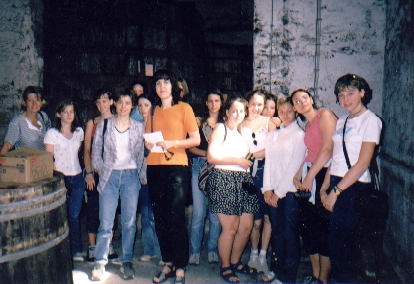
As usually, we woke up around 7 am and went to the breakfast. After that, we had some free time till half past ten, when we went to see local oil refinery and wine cellar  in Blato. There, the people in charge explained us everything about the process in making some specific sorts of wine or oil, and showed us old and new machines and compared them. Some of Hungarian students took some photos of those machines and refinery systems. After that we went to see some of the vineyards on the field of Blato.  

 We were back in camp at noon, and soon after that we had lunch. After lunch, we had free time, when a large majority of us swam and enjoyed the sea. At half past four, we walked down the road that goes from Prižba to Blato and saw everything regarding the big forest fire that happened in July “98” all across the island of Korčula. The teachers who were with us: Prof. Marela explained what has happened since the fire took place, and Prof. Marijana translated (with a small help from Daniella!) it all to English. Hungarians were quite surprised hearing how terrible that fire actually was. We got back to camp at six o'clock. After the dinner at 6:30 p.m., we had the evening off, and everyone did what he/she wanted.

Thursday the 31st of May

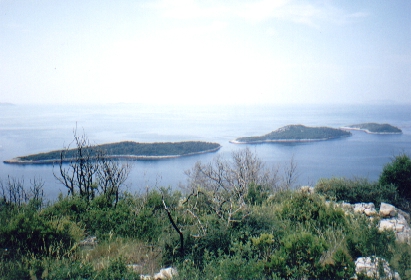
Going to Giča, visiting olive growing areas. Report about the names of small islands that can be seen from the hill: Obljak, Kosor, Stupa, Lastovo.

 ·        picking up some of the plant species:

Pistacia

Daucus

Ferula

Foeniculum

Hedera

Helichrycum

Brassica

Capsella

Stellaria

Cistus

Convolvulus

Taraxacum

Medicago

Spartium

Trifolium

Geranium

Arbutus

Euphorbia

Coronilla

Myrtus

Plantago

Galium

Ceratonia

Olea

      The final part includes

·        students exposition about characteristic plant species

·        presentation of herbariums

·        healing power of certain plant species

·        man’s influence on flora (cutting down the trees, fire)

·        plant species that grow along the sea and characteristic algae

At the end there is a conclusion:

Ecology of habitats and plant species

Climate conditions (red soil prevails) in which plant species on this area can live, there are different adaptations.

Thursday 31st of May

In the morning around 9am we went by bus to Gića about 15 minutes away from the hotel where we were staying. Our job was to find and pick plants that we didn’t see in the previous days. During our walk we saw a small cottage where people use to live while picking grapes or olives because they would work from early in the morning till late at night and by the time they finish they would be tired to drive home. It was mainly used as a shelter during that period. We also saw the fields where vineyards used to be. During our walk we came upon the plants: common origanum, common fig, e.t.c... Tea made of figs is good to cure coughing. Origanum is a plant that grows wild in the Mediterranean. It is suitable for making pizzas (to add a nice flavor), against coughing, stomach aches. e.t.c...


 At around 11am we came back and most of us went swimming. That afternoon we gave names to the plants we found that morning and prepared ourselves for the presentation. Afterwards we had to present our work to the rest of the students and to the teachers. On display we had our main plants and algae, we presented some special plants and talked about them for example: Carob, common St. John’s Wort, garden sage, hollyhock, European blackberry e.t.c...

Grind carobs are but in different teas against coughing. Carobs are also used for making brandy.

St. John’s Wort: In the blossom of this plant has medicine which is used against rheumatism and pains in the muscles. It is usually put in olive oil and it can be used to rub burns on the body.

Garden sage: The leaves of this plant have medicinal power, they are picked in hay before blossoming. It is a spice and a medicinal plant; it cures the mouth, reduces sweating and is good for the stomach.

Hollyhock: There are three different types of hollyhock. Medicinal parts are the flowers. It is used in many tea mixtures against coughing.

European blackberry: The leaves and the juice of the seed are used in medicine, addition to mixed tea is good for clearing the mouth.

PRESENTATION


 That night we organized a little party outside but it didn’t last too long because on Friday the Hungarian students had to prepare themselves to leave but we all had a good time while it lasted.


Our group Mediterranean Flora got very useful knowledge about plants and algae on our island Korčula.


Home    Back